Two products that we built and retired.
Before the studio, we built our own AI products. We took two of them to a private beta, and we retired both in 2026. We do not sell them. They show how we build: the same approval steps, tests, and limits go into each client agent.
Applicant tracking with an AI interviewer
VikaHire
Retired
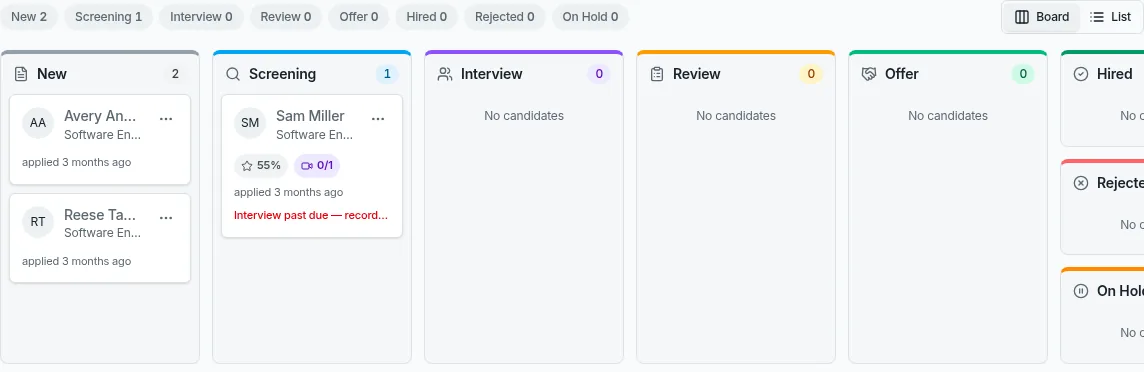
VikaHire was an applicant tracking system for recruiters, hiring managers, and interviewers. AI did the routine work, and a person on the hiring team made each decision.
What we built
- An AI interviewer
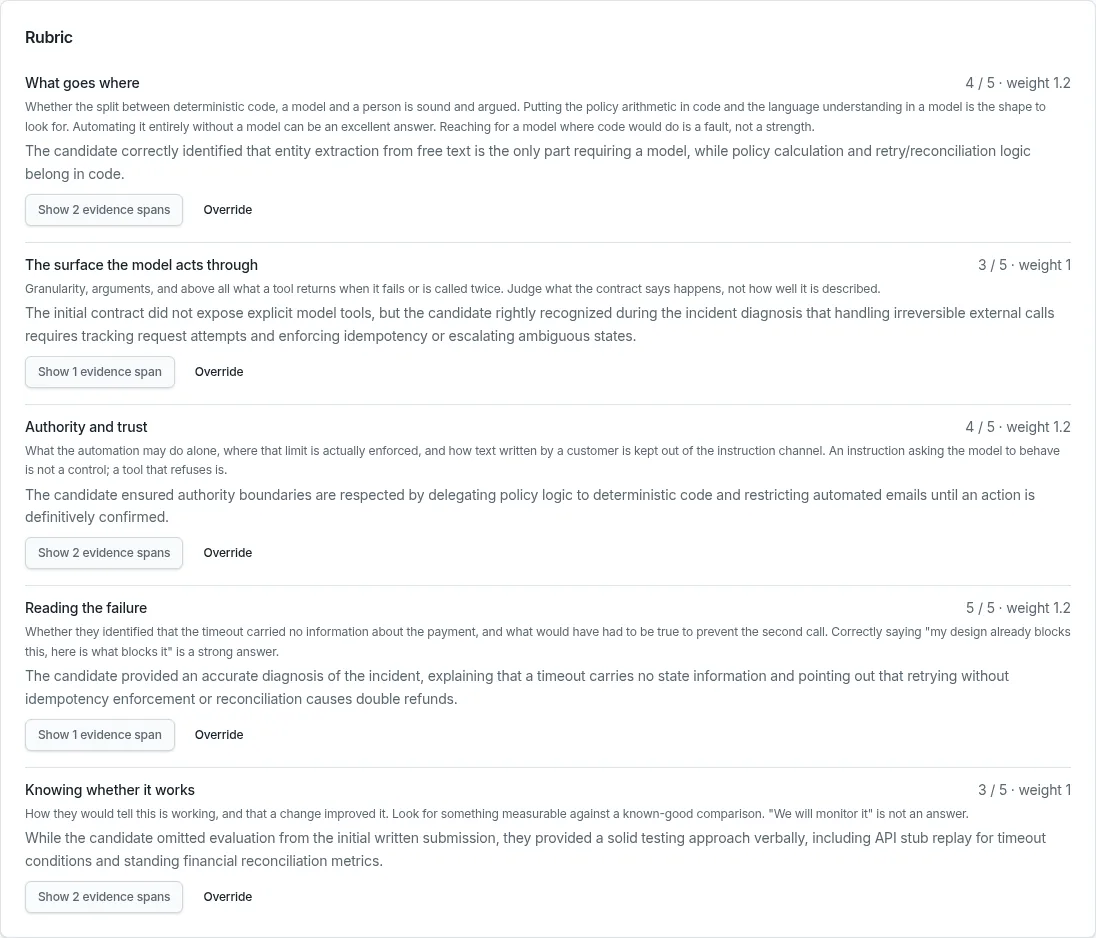
- It ran voice rounds, coding rounds, and system-design rounds, and asked follow-up questions. It never ran the code of a candidate.
- A person made the decision
- AI scores were advisory. After an AI interview, a candidate moved forward only when a person recorded the decision.
- Approval before change
- The assistant proposed a change. A person confirmed the change before it ran.
- Input stayed data
- Résumés and answers reached the model as untrusted data. Each AI interview score cited evidence in the transcript.
- Usage and limits for each organization
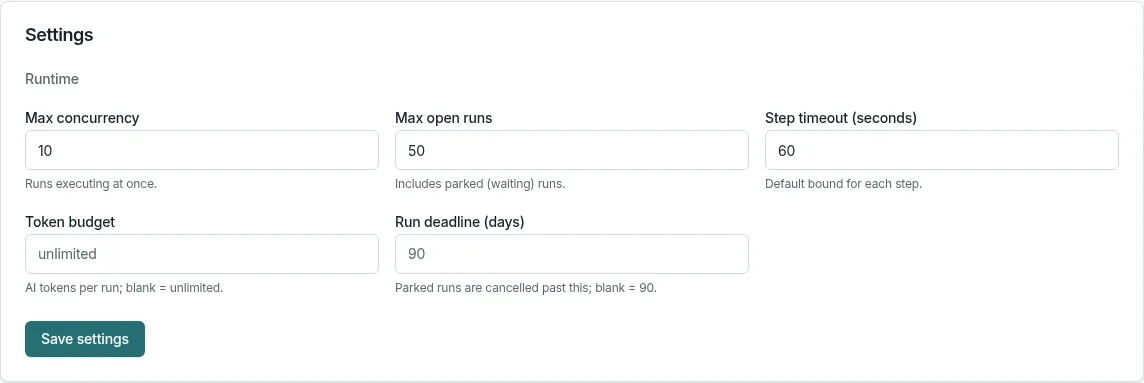
- VikaHire recorded each AI call without its content. A limit warned at 80% and stopped new AI interviews at 100%.
- Isolation and audit
- Each database query stayed inside one organization. An append-only log recorded approvals and agent changes.
Range-based project estimation
VikaEstimate
Retired
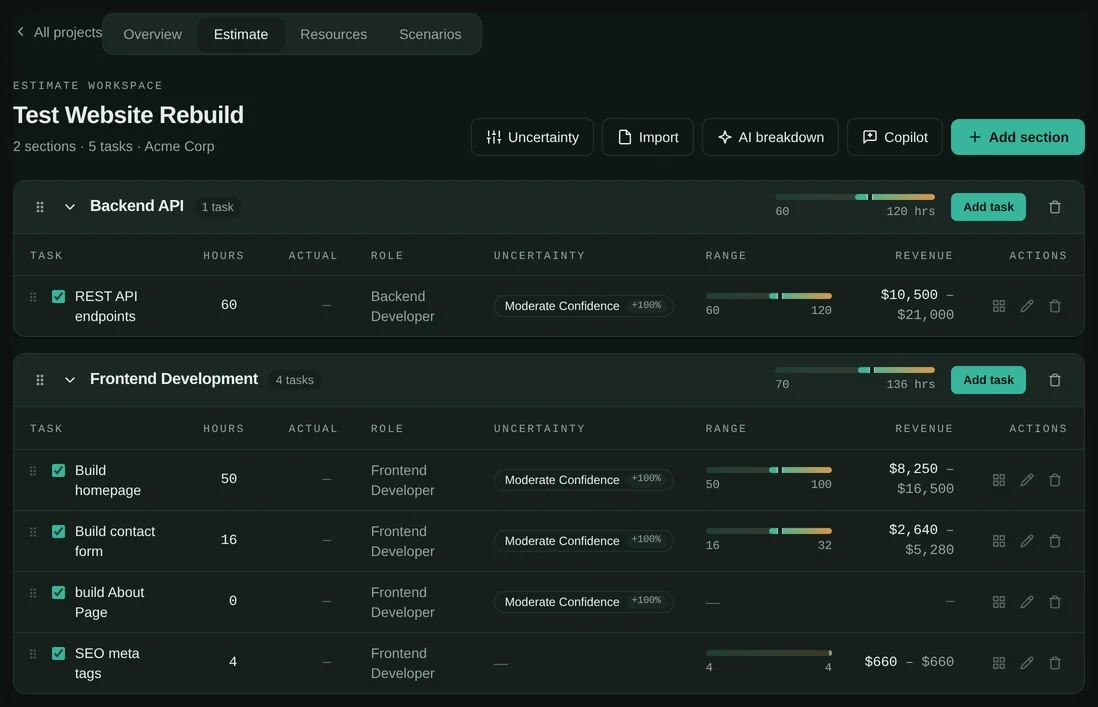
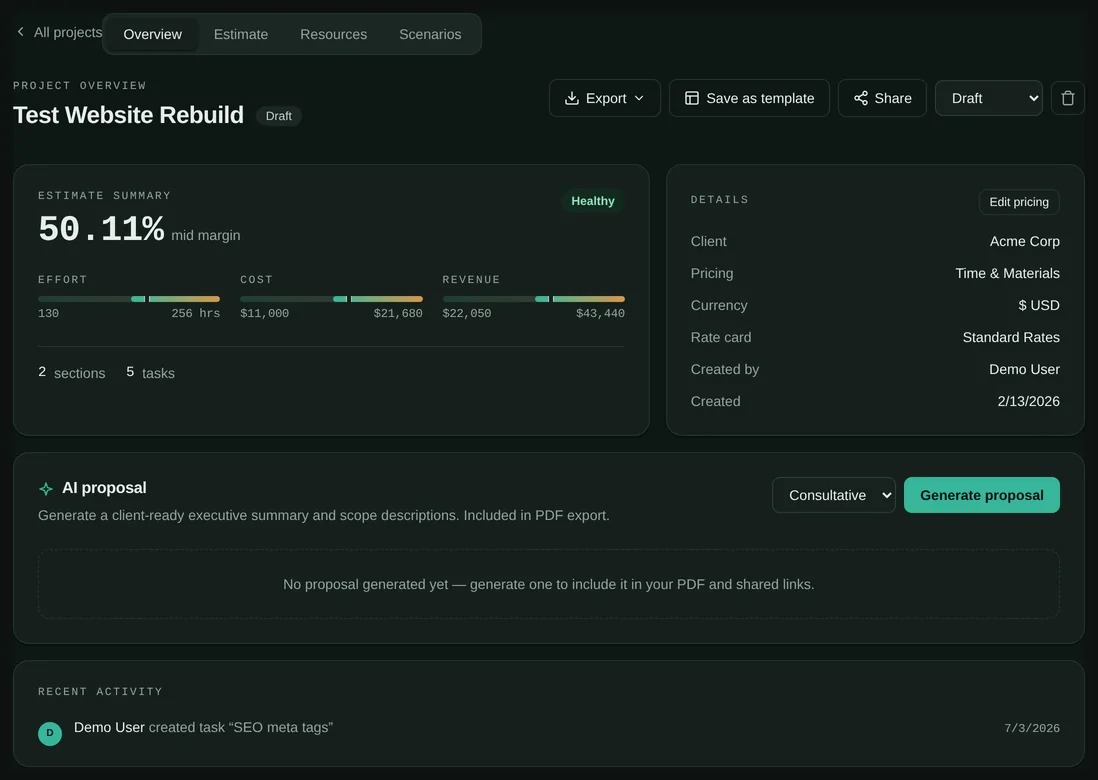
VikaEstimate turned a brief into tasks, hours, roles, and costs. Each task carried a confidence range, so a team saw the margin before it sent a price.
What we built
- Ranges, not padding
- Confidence factors showed where unknowns changed the hours. PERT gave the entered hours four times the weight of each bound.
- Margin while you edit
- Cost, revenue, and the low, mid, and high margin moved with each task.
- AI grounded in delivered work
- The AI proposed sections, tasks, hours, roles, and assumptions. Won projects gave it context, and recorded delivery hours showed estimation bias by role.
- One calculation everywhere
- The browser and the API called the same shared functions. Each project kept a frozen copy of its rate card.
Want this kind of engineering in your agent?
Tell us about the task. We will tell you whether an agent fits.